Columbus Day is celebrated in October to mark the arrival of Christopher Columbus in America. The national holiday was first declared by President Franklin D. Roosevelt in 1937.
Many people became uncomfortable celebrating Columbus Day. They felt that Columbus did not "discover" America. Indigenous people were already there. They also felt that the treatment of the native people by Columbus and other European explorers was often brutal. They forced the natives into slavery and killed many of them.
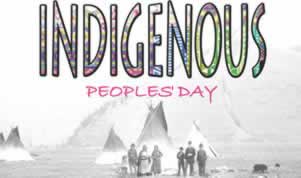
The idea of having Indigenous Peoples Day in the United States began in 1977 during a United Nations conference. It was proposed that Columbus Day be changed to Indigenous Peoples Day to recognize that native people were the first inhabitants of the Americas, including the lands that later became the United States.
It took until 1990 to see the first state, South Dakota, declare that Indigenous Peoples Day would be celebrated on the second Monday of October, the same day as Columbus Day.
Then, in 1992, exactly 500 years after Christopher Columbus landed in America, native groups agreed to celebrate native culture as a counter-celebration to Columbus Day. That year, Berkeley, California became the first city to rename Columbus Day to Indigenous Peoples Day. Since then, many other cities and states have done the same.
Source: wordville.com/columbus/reading/ColumbusIndigenous.html Columbus Day or Indigenous Peoples Day
©Courseware Solutions Wordville.com for Fun English Language Arts Learning

